
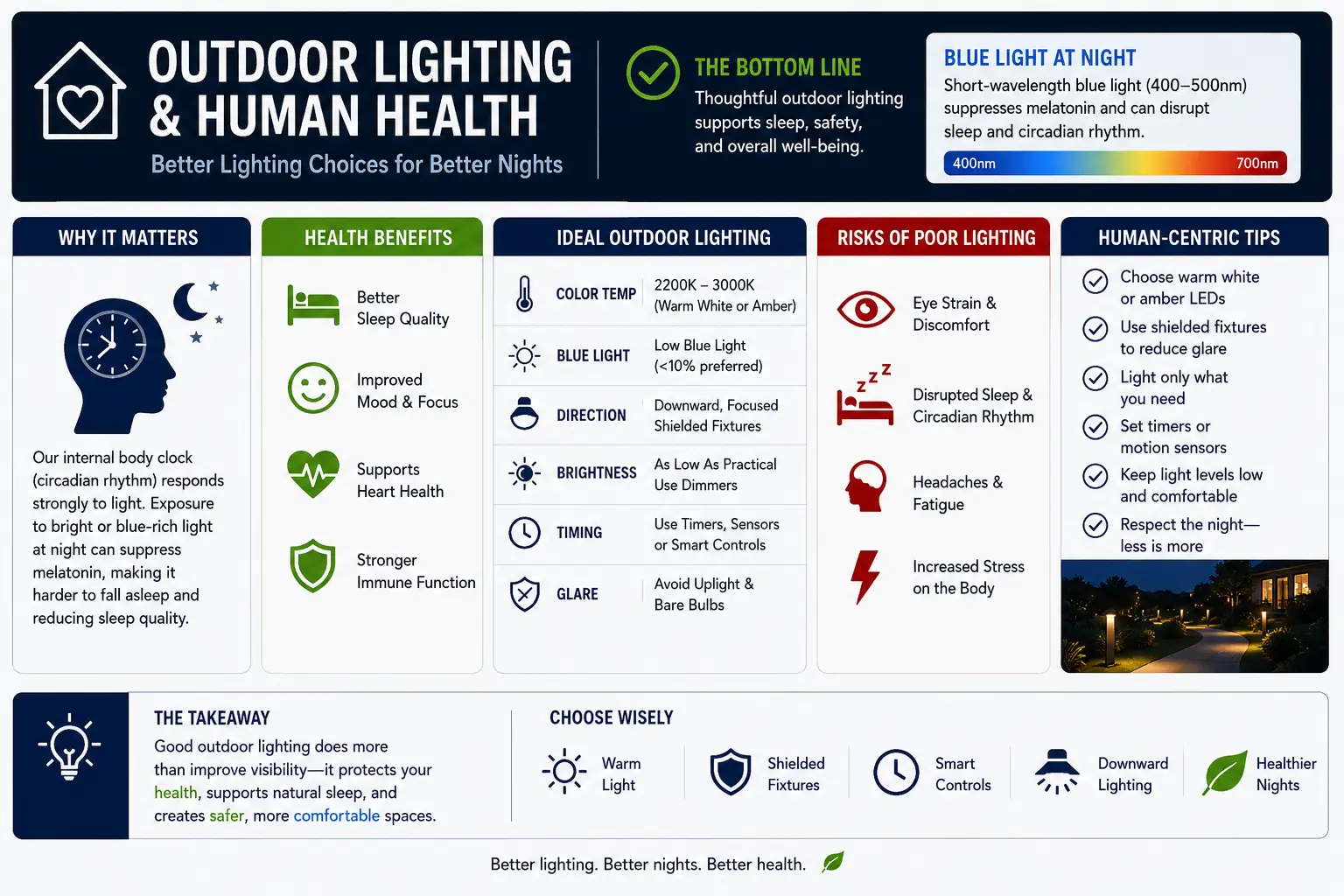
The Biology: How Your Eyes Respond to Night Light
The human eye contains two systems for processing light. The first is the familiar visual system — rods and cones that form images and enable sight. The second is a separate non-visual system, discovered only in the 1990s, that does not form images at all. It regulates biological time. Understanding this second system is the foundation of everything that follows.
The Discovery of ipRGCs — A Third Type of Photoreceptor
Until the late 1990s, it was assumed that the eye contained only two types of photoreceptors: rods (for low-light vision) and cones (for color and detail). Then Ignacio Provencio and colleagues, studying photosensitive skin cells in frogs, identified a novel protein called melanopsin — and found it expressed in a small subset of retinal ganglion cells in mice and humans. These cells, named intrinsically photosensitive retinal ganglion cells (ipRGCs), were functionally photosensitive independent of rod and cone input. They could respond to light even when isolated from the rest of the retina. This was a fundamental discovery: the eye has a third photoreceptor class, entirely unknown to science until the 1990s, with profoundly different functions from vision.
ipRGCs contain melanopsin, a photopigment with peak spectral sensitivity near 480nm — the blue-cyan range of the electromagnetic spectrum. When light at or near this wavelength reaches these cells, they fire signals through the retinohypothalamic tract directly to the suprachiasmatic nucleus (SCN) in the hypothalamus — the brain's master circadian pacemaker. The SCN interprets this signal as "it is daytime" and responds by:
- Suppressing the pineal gland's production of melatonin (the darkness hormone)
- Delaying the circadian phase — pushing the entire 24-hour biological clock later
- Increasing alertness signals (via cortisol and norepinephrine pathways)
- Elevating core body temperature (a daytime physiological pattern)
- Inhibiting the onset of sleep-promoting processes in the brain
The critical point: these responses occur at light intensities far below what we consider "bright." Harvard research showed that as little as 8 lux — roughly twice the brightness of a nightlight and a level easily exceeded by landscape fixtures aimed toward windows — measurably suppresses melatonin secretion.
Why ipRGCs Respond More to 480nm Than to Other Wavelengths
Melanopsin's absorption spectrum peaks near 480nm and drops sharply at longer wavelengths. At 600nm (orange-red range), melanopsin absorption is roughly 10–20 times less than at 480nm. This is why warm-white 2700K light — with its spectrum weighted toward longer wavelengths — has dramatically less biological activity at night than cool-white 5000K light, which contains substantial energy at 460–490nm. A peer-reviewed study comparing red (631nm) and blue (464nm) LED exposure found that after two hours, blue light suppressed melatonin to 7.5 pg/mL while red light allowed recovery to 26.0 pg/mL — a 3.5-fold difference in suppressive effect from the same light intensity. Wavelength is the critical variable, not total brightness.
The Circadian System and Why Disrupting It Has Consequences
The circadian system governs far more than sleep timing. It coordinates gene expression across virtually every organ system, regulating when cells divide, when DNA repair mechanisms are most active, when hormone production peaks, when the immune system is most effective, and when metabolic processes run most efficiently. When artificial light at night desynchronizes the circadian system — shifting melatonin onset later, corrupting phase relationships between organ clocks — the downstream biological effects are not limited to feeling tired. Research has implicated circadian disruption in impaired immune surveillance, altered estrogen regulation (relevant to breast cancer), dysregulated glucose metabolism (relevant to diabetes), cardiovascular inflammation, and mood regulation through effects on serotonin and dopamine systems.
Melatonin: The Hormone That Measures Darkness — and Why It Matters
Melatonin is often described simply as "the sleep hormone." That description undersells its biological significance. Melatonin is a precise biological signal of environmental darkness — a hormone whose nocturnal rise evolved over hundreds of millions of years as a real-time report of nighttime to every cell in the body. Suppressing it artificially carries consequences that extend well beyond sleep onset.
Normal Melatonin Physiology
In the absence of light exposure, melatonin secretion from the pineal gland begins approximately 2 hours before habitual sleep time, peaks in the middle of the night (typically between 2–4 AM), and falls to daytime levels by morning. This secretion pattern is tightly regulated by the SCN — the same nucleus that receives direct input from ipRGCs. Evening light exposure at biologically active wavelengths delays melatonin onset; morning light exposure advances it. The result is that the artificial light environment of modern homes and neighborhoods directly shapes each person's melatonin profile.
Dose-Response: How Much Light Suppresses How Much Melatonin
The relationship between light exposure and melatonin suppression is dose-dependent and wavelength-dependent. Research from the American Journal of Applied Physiology established a fluence-response curve for blue LED light (peak 469nm): suppression began at extremely low irradiances and reached half-maximum at roughly 14 lux of 469nm light at the cornea. The same research confirmed that blue monochromatic light was substantially more potent than equal irradiance of longer-wavelength light. The Harvard comparison study (Lockley et al.) found that 6.5 hours of blue light exposure suppressed melatonin twice as long as equivalent green light and shifted the circadian rhythm by 3 hours vs 1.5 hours for green.
Melatonin's Roles Beyond Sleep
Melatonin is not merely a sleep-onset signal. It functions as an antioxidant, directly scavenging free radicals and stimulating antioxidant enzyme production. It has oncostatic properties — it inhibits cancer cell proliferation, reduces estrogen receptor expression in breast tissue, and suppresses aromatase activity (the enzyme that converts androgens to estrogens). It regulates immune cell production and timing. It modulates glucose metabolism and insulin sensitivity. It has anti-inflammatory effects. This biological breadth is why chronic melatonin suppression — from years of residential light-at-night exposure — has been associated with a range of disease outcomes well beyond sleep disruption.
Children Are More Sensitive to Melatonin Suppression
A Japanese study specifically comparing children and adults found that melatonin suppression from blue-enriched 6200K LED lighting was significantly greater in children than adults at the same intensity. At 3000K, children showed greater suppression than adults (p < 0.05). The 6200K condition also significantly inhibited the natural increase in sleepiness that children experience as evening progresses. This heightened sensitivity appears related to larger pupil diameters (allowing more light through), clearer ocular media (less yellowing of the lens that filters blue light in older adults), and potentially higher photoreceptor density in younger retinas. Landscape lighting that enters children's bedrooms carries meaningfully higher circadian risk than the same lighting entering adult bedrooms.
Cancer Risk: The Epidemiological Evidence
The association between light at night and cancer risk — particularly breast cancer — is one of the most studied environmental health questions of the past two decades. The evidence base now includes multiple large cohort studies, case-control studies, and meta-analyses across hundreds of thousands of participants. Here is what the research actually shows — including its strength, its limitations, and what it means in practical terms.
The Proposed Mechanism: Melatonin, Estrogen, and Tumor Suppression
The primary hypothesized pathway linking light at night to breast cancer involves melatonin's oncostatic effects on estrogen-sensitive breast tissue. Melatonin suppresses aromatase activity (reducing local estrogen production), downregulates estrogen receptor expression in breast cells, directly inhibits cancer cell division, and reduces linoleic acid uptake (a fatty acid that promotes tumor growth). Chronic light-at-night exposure, by chronically suppressing nocturnal melatonin, would reduce these protective effects over years and decades. Animal studies have directly demonstrated that constant light exposure promotes tumor growth in estrogen-sensitive breast cancer models. Night-shift workers, who experience the most extreme chronic light-at-night exposure, have been the central study population for testing this hypothesis in humans.
Key Epidemiological Studies
IARC Classification: Night Shift Work as Probable Human Carcinogen
The International Agency for Research on Cancer (IARC) — the cancer research arm of the World Health Organization — classified "night-shift work involving circadian disruption" as a Group 2A probable human carcinogen in 2007, and reaffirmed this classification in 2019 based on additional evidence. Breast cancer is the most consistently associated outcome. While this classification applies primarily to occupational night-shift work (the most extreme form of light-at-night exposure), it is biologically relevant to residential outdoor lighting because the proposed mechanism — circadian disruption via melatonin suppression — is the same mechanism operative at residential exposure levels, just at lower intensity and duration.
What the Evidence Does and Does Not Show
It is important to be precise about the state of this evidence. Consistent epidemiological associations exist between residential outdoor light-at-night exposure and breast cancer risk. The mechanism is biologically plausible and supported by animal studies and in vitro research. Meta-analyses show statistically significant pooled risk ratios. However, full causal proof requires ruling out residual confounding (light-at-night correlates with urbanization, which correlates with many other exposures), and several individual studies have found null or inconsistent associations depending on exposure measurement method and covariate adjustment. The National Toxicology Program in 2021 concluded "moderate confidence" of a causal link between chronic light-at-night exposure and cancer. This is not the same as proof, but it is a substantial public health concern warranting precautionary action — especially for choices like outdoor lighting color temperature where the healthier option costs nothing extra.
Cardiovascular and Metabolic Disease Research
Beyond cancer, a growing body of research associates outdoor light-at-night exposure with cardiovascular disease, type 2 diabetes, obesity, and metabolic syndrome — through mechanisms tied to circadian disruption of metabolic timing, insulin signaling, and lipid regulation.
Cardiovascular Disease
A comprehensive review published in JAMA Network Open (2025) established that higher risks for coronary artery disease and stroke have been observed in people living in urban environments with brighter outdoor night light as measured by satellite. Brighter night light has been cross-sectionally associated with atherosclerosis (carotid plaque buildup), hypertension, and atrial fibrillation in well-characterized cohorts using bedroom and wrist-worn light sensors. A preprint analysis of over 88,000 UK Biobank participants found that personal night-light exposure predicted incidence of cardiovascular diseases including coronary artery disease, heart failure, and arrhythmias.
The cardiovascular mechanism runs through multiple pathways: disrupted circadian control of blood pressure (which normally dips at night — "non-dipping" hypertension is a cardiovascular risk factor), altered autonomic nervous system activity affecting heart rate variability, elevated evening cortisol from circadian disruption, and inflammatory pathway activation from sleep disruption. In animal models, long-term exposure to constant light produces myocardial fibrosis, hypertrophy, impaired contractility, and accelerated progression to heart failure.
Type 2 Diabetes and Metabolic Syndrome
The metabolic mechanism is particularly well-characterized: the circadian clock controls the timing of insulin secretion, glucose uptake, gluconeogenesis, and lipid metabolism. These processes are timed to run most effectively during the day. Disrupting the circadian signal — through nighttime light that tells peripheral metabolic clocks "it's daytime" — misaligns these processes with food intake and activity patterns. A 2022 Proceedings of the National Academy of Sciences study found that even a single night of light exposure during sleep acutely increased heart rate and decreased insulin sensitivity the following day in healthy volunteers.
The Obesity Connection
Large-scale surveys consistently show that brighter residential night-time lighting is associated with reduced sleep duration, impaired daytime functioning, and greater incidence of obesity — findings cited directly in the 2016 AMA policy report. The 33CCHS study found that even after adjusting for physical activity, diet, and other metabolic risk factors, higher outdoor LAN remained independently associated with metabolic syndrome components. Obesity partially mediates the LAN-diabetes association, but LAN also affects glucose metabolism through pathways independent of body weight.
Mental Health: Depression, Anxiety, Bipolar Disorder
The relationship between outdoor light at night and mental health outcomes is an emerging area of research with findings that are both statistically robust and mechanistically coherent — but require careful interpretation because correlation and causation are difficult to disentangle in observational data.
Depression
A 2025 systematic review and meta-analysis published in Environment International analyzed 88 studies and found that light-at-night exposure was associated with increased odds of depression prevalence: OR 1.18 (95% CI 1.09–1.28) overall, with stronger associations for wrist-measured indoor LAN (OR 1.30) than satellite-measured outdoor LAN (OR 1.10). The association was strongest in older adults (OR 1.56). A Biobank-based study of UK participants found higher nighttime light emission associated with greater severity of depressive symptoms, an effect that remained after adjusting for air pollution, economic deprivation, and green space.
Adolescents: Sleep as the Mediating Pathway
An important NIH-supported study published in JAMA Psychiatry (2020) combined satellite data with the National Comorbidity Survey Adolescent Supplement to examine outdoor ALAN and mental health in US teens. Key findings: teens in areas with higher outdoor LAN went to bed 29 minutes later on average and got 11 fewer minutes of sleep than teens in lower-LAN areas. Each median absolute deviation increase in ALAN was associated with 1.07 times the odds of mood disorder and 1.10 times the odds of anxiety disorder. Specific associations included bipolar disorder (OR 1.19) and major depressive disorder or dysthymia (OR 1.07). The study authors proposed disrupted sleep as the primary mediating pathway — a hypothesis supported by a Bulgarian multi-city study that specifically confirmed sleep problems partially mediated the outdoor ALAN to depression/anxiety relationship.
Bipolar Disorder and the Circadian Clock
The bipolar disorder association with outdoor LAN is particularly noteworthy because circadian rhythm disruption is a well-documented feature of bipolar disorder — not merely a consequence of it, but possibly a contributing mechanism. Disruptions to the suprachiasmatic nucleus, altered melatonin timing, and phase-shifted cortisol rhythms are all documented in bipolar patients. Light-at-night exposure that chronically destabilizes the circadian clock would plausibly interact with genetic predispositions to bipolar disorder. This is an area requiring longitudinal research, but the cross-sectional signal (OR 1.19 in the JAMA Psychiatry study) is a meaningful public health observation.
The Social Equity Dimension
The NIH study noted that adolescents from racial/ethnic minority groups, from immigrant families, and from lower-income households were more likely to live in areas with high outdoor light-at-night exposure. This means the mental and physical health burdens of light-at-night exposure are not distributed equally — they disproportionately affect communities that already face elevated health risks from other environmental exposures. Landscape lighting choices made by individual homeowners are a small part of this picture, but the aggregate effect of neighborhood lighting decisions on ambient night-sky brightness is real and measurable.
Sleep Disruption: The Most Direct and Best-Documented Effect
Of all the health effects associated with outdoor light at night, sleep disruption is the most direct, the most rapidly occurring, and the best-characterized mechanistically. It is also the clearest pathway through which outdoor landscape lighting from neighboring properties can affect your household's health.
How Outdoor Light Enters the Sleep Environment
Outdoor landscape lighting affects indoor sleep environments through two primary routes: direct window transmission (light shining through bedroom windows from uplights, path lights near windows, or security lights), and sky glow (the diffuse brightening of the night sky over lit areas that reduces the darkness of outdoor darkness even with curtains drawn). Both are relevant. A room with thin curtains in a well-lit neighborhood may have measurable light levels during the night even with no direct fixture shining at the window.
Human comfort is strongly affected by whether the eye sees the lamp itself or only the surface being lit. Unshielded outdoor lights can create disability glare, bedroom window intrusion, and harsh contrast even when the total wattage is not high. A shielded fixture reduces direct view of the lamp and sends more useful light downward. For a practical visual explanation, see the shielded vs. unshielded outdoor lighting guide before deciding whether a glare problem needs a warmer bulb, lower output, better aiming, or a different fixture.
The 8-Lux Threshold: Very Low Levels Matter
Harvard research by Czeisler and colleagues established that as little as 8 lux — approximately twice the brightness of a standard nightlight, and a level easily achieved by landscape uplight spilling onto a window — measurably affects melatonin production and circadian rhythm timing. This low threshold means that homeowners' assumption that "landscape lighting is too dim to matter biologically" is not supported by the science. Specifically, a landscape uplight fixture aimed at a tree adjacent to a neighbor's bedroom window, producing 20–50 lux at the window surface, would be operating well above the documented biological threshold.
Sleep Architecture Effects
Beyond melatonin suppression and sleep onset delay, research has documented that even low-level light exposure during sleep — without waking the sleeper — affects sleep architecture. A 2022 PNAS study by Mason and colleagues found that light exposure during sleep increased heart rate (via the sympathetic nervous system remaining active), reduced slow-wave sleep (the most restorative sleep stage), and decreased next-day insulin sensitivity even though subjects reported normal subjective sleep quality. The biological effects of light during sleep occur without consciousness — the ipRGC system signals through the SCN regardless of whether the person is awake to notice the light.
Children: Greater Sensitivity, Greater Consequences
Sleep is not merely a comfort for children — it is a developmental necessity. Human growth hormone is primarily secreted during the deep slow-wave sleep stages that early nocturnal periods support. Memory consolidation, emotional regulation, immune function, and neural development all depend on adequate sleep architecture. Research specifically in children found that blue-enriched LED lighting at 6200K (similar to many outdoor security lights and some landscape fixtures) significantly inhibited the natural increase in sleepiness children experience at night — meaning children exposed to this spectrum stay more alert later, fall asleep later, and get less total sleep. Warm 2700K lighting at the same intensity did not produce this effect to a significant degree. For families with young children, the color temperature of outdoor lighting that reaches their bedrooms is not a trivial aesthetic question.
The 2016 AMA Policy Statement: What It Says and Why It Matters
In June 2016, the American Medical Association's Council on Science and Public Health adopted a formal policy statement on outdoor LED lighting — the first time a major medical organization had issued guidance specifically on the health implications of outdoor lighting color temperature. Understanding what the AMA actually said (and what it did not say) matters for interpreting the landscape lighting choices relevant to your home.
1. Support LED conversion: The AMA supports "proper conversion to community-based LED lighting, which reduces energy consumption and decreases the use of fossil fuels." The AMA is explicitly not anti-LED.
2. Minimize blue-rich content: The AMA "encourages minimizing and controlling blue-rich environmental lighting by using the lowest emission of blue light possible to reduce glare."
3. 3000K maximum for outdoor installations: The AMA "encourages the use of 3000K or lower lighting for outdoor installations such as roadways. All LED lighting should be properly shielded to minimize glare and detrimental human and environmental effects, and consideration should be given to utilizing the ability of LED lighting to be dimmed for off-peak time periods."
Why 3000K Is the AMA Threshold
The AMA chose 3000K as the upper limit for outdoor lighting based on the spectral content of LEDs at that color temperature. At 3000K, the human eye still perceives the light as "white" — it is slightly warmer in tone, but not perceived as yellow. Critically, a 3000K LED has approximately 21% of its output in the short-wavelength blue range compared to a 4000K LED. The AMA report noted that a 4000K LED "contains a high level (over 30%) of short-wavelength blue light" — meaningfully above what is present in 3000K units. The report also noted that the new World Atlas of Artificial Night Sky Brightness found that retrofits using 4000K lamps could result in a 2.5-fold increase in light pollution compared to the warmer lamps being replaced.
The same lighting decisions that reduce sky glow often improve nighttime comfort for people inside the home. Lower brightness, warmer color, better shielding, and shorter operating hours can reduce glare, bedroom window intrusion, and harsh nighttime contrast. Our guide to reducing night-sky glow around homes explains how homeowner lighting choices can support dark-sky goals while also making the property feel calmer and less overlit at night.
The Industry Pushback and Its Resolution
The Illuminating Engineering Society (IES) — the body that sets lighting standards in the US — initially opposed the AMA's 3000K recommendation in 2017, calling it lacking "scientific foundation." The opposition was partly driven by the fact that manufacturers had heavily commercialized 4000K and 5000K LED fixtures and had significant financial interests in their continued use. By 2022, however, the IES's position had shifted meaningfully toward lower color temperatures for outdoor installations. The city of Davis, California became a famous case study: residents demanded the complete replacement of recently installed 4000K and 5000K streetlights with warmer alternatives, and the city complied. This trajectory — initial industry resistance, followed by gradual adoption of health-protective standards — mirrors the historical pattern of many environmental health policy debates.
What the AMA Statement Means for Homeowners
The AMA recommendation was directed at municipalities regarding street lighting, but the biological principles apply equally to residential outdoor fixtures. A homeowner choosing between 2700K and 5000K landscape LED bulbs is making the same fundamental spectral choice the AMA addressed. The 2700K option (below the AMA's 3000K threshold) produces less melatonin suppression, less glare, less light pollution, and less circadian disruption — with no functional disadvantage for illuminating a yard or garden. The 5000K option produces approximately 3× more biologically active blue light output, more glare (the AMA specifically cited disability glare from high-CCT LEDs), and more light pollution.
Color Temperature: Which Numbers Matter for Health
Color temperature — measured in Kelvin (K) — is the most actionable single variable in outdoor lighting's health impact. Understanding what different CCT values actually mean in biological terms, and how landscape lighting's common range maps onto health outcomes, allows you to make informed choices rather than guessing.
The Kelvin Scale and Its Biological Significance
Color temperature is a measure of the spectral composition of light — specifically, the relative amounts of different wavelengths in the visible spectrum. Higher Kelvin values mean more short-wavelength (blue) energy. Lower Kelvin values mean more long-wavelength (red-orange) energy. The term "color temperature" comes from blackbody radiation physics — it describes the temperature a theoretical perfect radiator would need to produce that spectral distribution. A 2700K lamp approximates the warm glow of an incandescent bulb or candlelight. A 5000K lamp approximates noon sunlight.
| Color Temp | MSV (Melatonin Suppression) | Blue Content (~450-500nm) | AMA Compliant? | Recommended for Landscape? |
|---|---|---|---|---|
| 1800–2200K (Amber) | ~0.5–1.5% | Minimal | Yes — exceeds recommendation | Best choice for health; ideal near bedroom windows |
| 2700K (Warm White) | ~3.6% | Very low | Yes — below 3000K threshold | Best practical choice; AMA-compliant, good aesthetics |
| 3000K (Soft White) | ~5–7% | Low | Yes — at the AMA limit | Acceptable; slightly more blue than 2700K |
| 4000K (Cool White) | ~9–11% | Moderate-high (30%+) | No — above AMA recommendation | Avoid for residential outdoor use |
| 5000K (Daylight) | ~12.3% | High | No — significantly above threshold | Do not use in residential outdoor settings |
| 6500K (Cool Daylight) | ~14–16% | Very high | No | Avoid entirely outdoors at night |
The 2700K vs 3000K Decision for Landscape Lighting
Both 2700K and 3000K are warm-white options that comply with the AMA recommendation. From a pure health standpoint, 2700K is preferable — it contains roughly 40–50% less short-wavelength content than 3000K and produces a Melatonin Suppression Value of ~3.6% vs ~5–7% for 3000K. In practice, both are much better choices than 4000K or 5000K. The aesthetic difference: 2700K appears slightly more amber and reminiscent of incandescent; 3000K appears slightly crisper and "whiter" while remaining warm. For landscape lighting that may enter bedroom windows or reach neighbors' homes, 2700K is the better choice. For path lighting in active outdoor areas used later in the evening, 3000K is acceptable. Neither should be chosen over the other for dramatically different aesthetic reasons — the difference in appearance is subtle. See the color temperature guide for complete selection guidance with fixture examples.
Amber and Red Spectrum: The Most Health-Protective Options
For areas of highest concern — lighting near children's bedrooms, lighting in locations where it might shine into neighbors' windows at night, or lighting for households with known circadian sensitivity — amber (1800–2200K) and red-spectrum fixtures are the most biologically inert options. Melanopsin peak absorption at ~480nm is far removed from the 580–700nm range that amber and red sources emit. These sources have been experimentally confirmed to cause minimal melatonin suppression even at moderate intensities. The tradeoff: amber and red sources render colors poorly (low CRI) and may give vegetation and stone an unnatural appearance. They are most appropriate for accent and pathway lighting rather than task or security lighting.
Practical Choices: Health-Protective Landscape Lighting Design
The research on outdoor lighting and human health translates into a specific, actionable set of design principles for residential landscape lighting. None of these principles require sacrificing lighting function or aesthetics — they are parallel requirements that good lighting design already satisfies for other reasons (reduced light pollution, lower energy use, better dark-sky compliance).
Outdoor lighting that is comfortable for people usually follows many of the same principles that protect the night environment: lower glare, warmer color, tighter aiming, and shorter operating hours. If exterior lighting reaches bedroom windows or runs all night without a clear purpose, review the outdoor lighting curfew requirements guide to understand how late-night lighting limits are commonly applied. Many of those same changes also reduce ecological pressure, and the bird-friendly outdoor lighting guide explains why nighttime brightness near trees, rooflines, and landscape cover should be handled carefully.
The single most impactful health-protective choice. Switching from 4000K to 2700K LEDs reduces biologically active blue-light output by approximately 65%, while costing no more per bulb. Applies to all outdoor fixtures: path lights, spotlights, uplights, step lights, wall washers. AMA recommendation: ≤3000K for all outdoor lighting. For health-maximizing choice: 2700K. See the color temperature guide.
Shielded fixtures that direct light downward rather than horizontally or upward prevent light from entering bedroom windows and avoid contributing to sky glow. The AMA specifically recommends that all LED outdoor lighting be "properly shielded." A path light with a shielded downward lens keeps light on the path rather than broadcasting it laterally toward nearby windows. Avoid exposed-bulb fixtures and upward-facing decorative fixtures in locations close to occupied windows. See the dark-sky fixture selection guide.
Operating landscape lighting through the night extends the duration of any health impact. Melatonin suppression duration is as important as intensity. Running lights until midnight or dusk-to-dawn exposes sleeping household members and neighbors to biologically active light during peak melatonin secretion hours (11 PM–3 AM). Setting timers to extinguish lights by 10–11 PM dramatically reduces the circadian dose. Motion-activated controls that only illuminate when someone is present are the most health-protective operation mode. See the timer setup guide.
Melatonin suppression is dose-dependent — more lumens at a given distance produces more suppression. Using the minimum lumen output necessary for the application (path visibility rather than security flood levels for most landscape uses) reduces biological impact proportionally. Many landscape LED bulbs are available from 2W to 7W; a 2W path light produces adequate illumination for foot traffic navigation with far less biological impact than a 7W equivalent. The energy calculator can help size systems appropriately.
For fixtures that are unavoidably positioned to illuminate bedroom windows — uplighting trees adjacent to a house, wall washers near window openings, garden path lights that run under bedroom windows — amber (1800–2200K) bulbs or true amber (LED amber, not "warm white") eliminate nearly all melanopsin-activating wavelengths. This is the recommendation followed by DarkSky International and used in observatories, turtle-nesting areas, and wildlife corridors for similar biological reasons. See the wildlife-friendly lighting guide for amber fixture options.
If outdoor lighting — yours or a neighbor's — enters bedroom windows at a level perceptible during the night (faint but visible glow on walls or ceiling), installing blackout curtains or room-darkening blinds in bedrooms is an effective mitigation. This is particularly important for children's rooms. Studies document that even low-level bedroom light during sleep affects heart rate, insulin sensitivity, and sleep architecture without waking the sleeper — meaning occupants may not realize they are being affected. Blackout curtains are the most practical personal-scale intervention against neighborhood light pollution.
A Note on What Landscape Lighting Specifically Can and Cannot Do
Low-voltage 12V AC landscape lighting contributes less to outdoor light-at-night exposure than streetlights, commercial signage, parking lot lighting, and security floodlights — all of which operate at much higher intensities and from much greater heights, producing more sky glow and more direct window exposure. A homeowner choosing 2700K landscape lighting is making a real and measurable health-protective choice for their immediate household and neighbors. They are not, however, solving the broader urban light pollution problem. That requires policy changes at the municipal level — the setting where the AMA's recommendation was directed. For a broader perspective on the light pollution issue, see the light pollution guide and the dark-sky compliance guide. For the impact on non-human life, see the wildlife-friendly lighting guide and the biological impact of outdoor light color.
Outdoor Lighting and Human Health FAQ
Is the health research on outdoor light at night conclusive?
The research is at different stages for different outcomes. Sleep disruption and melatonin suppression from blue-enriched light at night are among the most replicated findings in chronobiology — the mechanisms are well-understood and the dose-response relationships are established. For cancer, cardiovascular disease, and metabolic outcomes, the evidence is epidemiological associations of consistent direction across multiple large studies, with biologically plausible mechanisms, but without the same level of causal certainty as the circadian biology. The IARC classifies night-shift work as a Group 2A probable human carcinogen. The National Toxicology Program rates the evidence for a causal link between chronic light-at-night exposure and cancer as "moderate confidence." Importantly, none of the health-protective design choices (2700K over 4000K, downward shielding, timers) impose any cost or functional disadvantage — they are pure benefits under any interpretation of the evidence.
My landscape lights are very dim — can they really affect health?
Intensity matters less than wavelength and duration for circadian effects. A dim cool-white 5000K light that shines into a bedroom window for 7 hours can have more biological impact than a brighter 2700K light that stays on for 2 hours and is shielded away from windows. Harvard research established melatonin suppression at 8 lux — a level below what most outdoor pathway fixtures produce at 3 feet. The critical variables are: (1) Does the light reach the sleeper's eyes? (2) What wavelength is it? (3) How long is the exposure? Low-voltage landscape lights aimed toward bedroom windows, operating all night, with cool-white bulbs are the problematic configuration. Low-voltage landscape lights aimed downward onto paths, off by 10 PM, with 2700K bulbs are the health-protective configuration — regardless of the absolute lumen output.
Can I retrofit my existing landscape fixtures to be healthier?
Yes, in most cases. If your existing fixtures use replaceable MR16, G4, or other standard landscape lamp types, replacing them with 2700K warm-white LEDs is the simplest and most cost-effective health improvement you can make. If your fixtures are integrated LEDs with non-replaceable light sources at 4000K or higher, replacement of the fixture itself is the long-term solution. For shielding, many landscape fixture manufacturers offer aftermarket shields, baffles, and louvers that can be added to existing spotlights to reduce light spill in sensitive directions. For timing, adding a smart timer or upgrading your transformer to one with programmable schedules addresses the duration issue. See the MR16 LED replacement guide for 2700K landscape LED options and the timer guide for scheduling options.
What is the difference between 2700K and 3000K in terms of human health impact?
Both comply with the AMA's recommendation of 3000K or lower for outdoor lighting, and both are substantially healthier than 4000K or 5000K. The difference is real but not dramatic: 2700K warm-white LEDs have a Melatonin Suppression Value (MSV) of approximately 3.6% compared to approximately 5–7% for 3000K lamps — roughly a 50% lower suppressive effect for 2700K. 2700K also contains roughly 30–40% less absolute energy at wavelengths near 480nm (melanopsin peak). In practical terms: for landscape lighting that has any chance of entering bedroom windows or reaching neighbors' homes at night, 2700K is the better choice. For active outdoor entertainment areas used in the early evening, the difference between 2700K and 3000K in a well-designed, shielded fixture is unlikely to be clinically significant. For color rendering of green vegetation, 3000K renders slightly more vividly — a consideration for aesthetic landscape lighting.
Does the color temperature of landscape lighting affect wildlife as well as humans?
Yes — and in many cases the wildlife effects of cool-white outdoor LEDs are even more dramatic than the human health effects, because many species evolved without any artificial night light and their circadian and behavioral systems have no adaptation to it. Insects are attracted 2–3 times more strongly to UV and blue-rich light (5000K+) than to warm amber light (1800–2200K). Sea turtle hatchlings disoriented by artificial beach lighting — leading them away from the sea — respond specifically to short-wavelength light. Migratory birds tracked by spectroscopic collar data show greater disorientation near cool-white LED light sources than warm-white or amber sources. Firefly populations decline more rapidly in areas with high cool-white LED outdoor lighting. The health-protective color temperature choices for humans (2700K and below) are also the wildlife-protective choices. See the complete biological impact of outdoor light color guide.
Related Sustainable Lighting and Health Guides
- Dark Sky Compliance Guide
- Color Temperature Guide
- Biological Impact of Light Color
- Wildlife-Friendly Outdoor Lighting
- Light Pollution vs. Lumen Pollution
- Dark Sky Fixture Selection Guide
- Fix Light Trespass Guide
- Outdoor Lighting Ordinance Guide
- Carbon Footprint Guide
- Solar vs Low-Voltage Efficiency
- Minimizing Energy Waste
- Smart Outdoor Lighting Controls
- Understanding Bug Ratings
- Landscape Lighting Energy Calculator
- LED vs Halogen Guide
- MR16 LED Replacement Guide
- Timer Setup Guide
- Photocell Guide
- Landscape Lighting Layout Guide
- Transformer Guide
- Brand Comparison Guide
- Landscape Lighting Maintenance
- Portfolio Lighting Alternatives
- Landscape Lighting Cost Guide