
Quick Answer
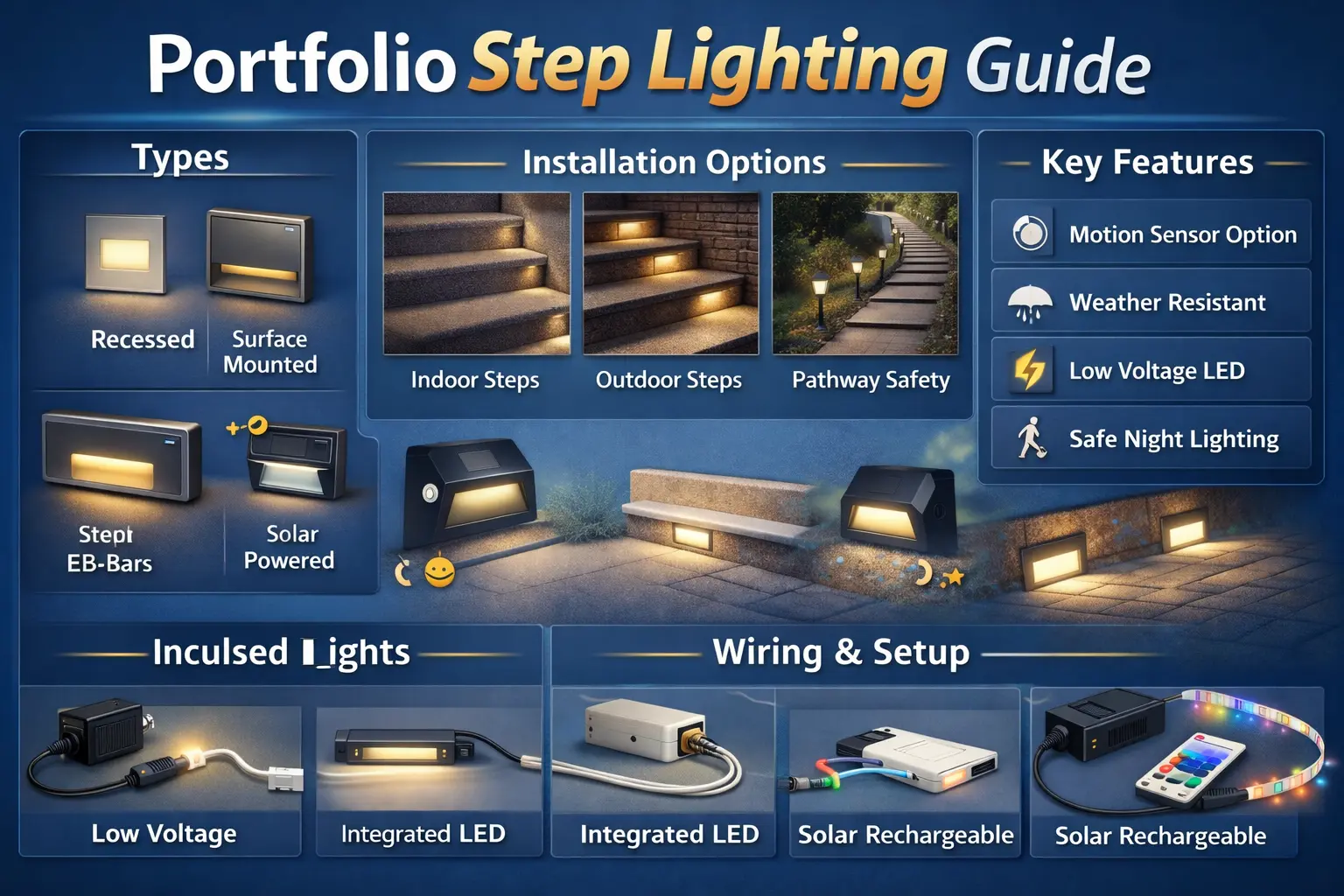
Portfolio step lighting improves safety by lighting the tread of outdoor stairs without glare, making elevation changes easier to see at night.
Most systems use low voltage fixtures mounted on risers, side walls, or nearby structures. The goal is consistent, low-level light across each step so users can clearly read the transition without harsh brightness.
- Best placement: risers or side walls
- Typical spacing: every step or every other step
- Power type: low voltage (most common)
Step Lighting Decision Guide
Use this quick logic to plan your setup:
- If stairs are heavily used → light every step
- If ambient lighting exists → light every other step
- If glare is an issue → lower placement or shielded fixtures
- If wiring is complex → plan transformer load first
- If appearance matters most → use hidden or linear systems
Fast step lighting rules:
- Place lights where they illuminate the tread, not the eyes
- Keep brightness consistent across all steps
- Use low voltage systems for flexibility and safety
- Avoid placing lights too high on short stair runs
- Combine step lighting with path lighting for best results
How Many Step Lights Do You Need?
Most stair runs need consistent lighting across all steps rather than lighting only the top or bottom.
A common approach is to light every step on high-traffic stairs, or every second step on longer runs where surrounding lighting fills the gaps.
If you are unsure where lights should go, start with Portfolio lighting placement.Most outdoor stairs are poorly lit—and that is exactly why they become safety problems at night.
Step lighting fixes that, but only when it is placed correctly. Too bright and it creates glare. Too dim and it does nothing. The goal is not more light—it is better visibility at the exact point where people need it.
If you landed here because you are trying to light outdoor stairs, deck steps, or retaining wall steps, you are in the right place. This page covers what step lighting is good for, where it usually works best, how it fits into a low voltage setup, and what other Portfolio pages to use next depending on whether you need placement help, installation guidance, replacement parts, or troubleshooting.
For a more modern built-in look, many homeowners are moving from surface-mounted fixtures to hidden LED systems. This hardscape and linear step lighting guide shows how to install invisible glow lines under steps and caps for a cleaner finish.
Who This Step Lighting Guide Is For
- Homeowners lighting outdoor stairs or decks
- People fixing dark or unsafe steps
- DIY users planning low voltage systems
- Anyone upgrading older Portfolio lighting setups
Example of a Good Step Lighting Setup
A typical outdoor stair setup might include:
- Low voltage lights installed on each riser
- Even spacing across all steps
- Warm color temperature (2700K–3000K)
- Transformer sized for current and future fixtures
This creates consistent visibility without glare and blends naturally with surrounding landscape lighting.
What Portfolio Step Lighting Is Really Meant to Do
The main job of step lighting is simple: help people understand changes in elevation after dark. That sounds basic, but it is a big deal. Outdoor steps can disappear visually at night, especially when they blend into dark decking, concrete, stone, mulch edges, or surrounding landscaping. A well-placed step light helps define the edge of a tread, the change in height, and the direction of travel without turning the entire area into a floodlit zone.
That is also why step lighting should not be judged by brightness alone. More light is not always better. In fact, overly bright stair lighting can make steps harder to read if it creates glare or throws harsh shadows. The better goal is usable light at the transition point. You want people to feel oriented, not blinded.
Portfolio step lighting also helps support the overall flow of an outdoor lighting design. When used with Portfolio landscape lighting, step fixtures create continuity between the movement zones and the decorative zones. That keeps the system from feeling random. Your path lights guide the walkway, your step lights handle the elevation change, and your accent fixtures highlight the features worth seeing.
Where Should Step Lights Be Placed?
Step lights should be placed so they wash light across the tread surface without shining directly into people’s eyes.
Common placement locations include stair risers, side walls, retaining walls, and adjacent structures depending on the layout.
Best Places to Use Portfolio Step Lighting
Outdoor step lights are useful anywhere the grade changes and people need a clear visual cue. Some of the most common applications are obvious, like front porch steps or backyard deck stairs. Others are easier to miss, especially if the area feels usable in daylight but turns into a dark transition zone at night.
Deck Stairs
This is one of the most natural uses for step lighting. Deck stairs often sit next to seating areas, grills, patio zones, or backyard traffic paths. Step fixtures help people move safely without needing a bright overhead flood of light. They also pair naturally with Portfolio deck lighting when you want the whole deck area to feel more polished.
Front Entry Steps
Front steps matter for both safety and curb appeal. A dark front entry can feel unwelcoming and can make simple transitions harder than they should be. In some layouts, step lights work alongside Portfolio wall lantern fixtures or Portfolio post lighting to build a clearer entry sequence.
Retaining Wall Steps and Garden Elevation Changes
These are easy places to underlight. Stone steps, wall cut-throughs, and landscape level changes can disappear visually because the surroundings are already darker and more textured. Step lighting helps define the path without taking away from the landscaping itself.
Side Yards, Secondary Walkways, and Service Areas
Not every stair problem happens in the prettiest part of the yard. Utility-side paths, side gates, and back access points often need practical light more than decorative light. That is where a restrained step lighting plan can solve a real problem with very little visual fuss.
| Location | Main Goal | What Step Lighting Helps With |
|---|---|---|
| Deck stairs | Safe movement to and from outdoor living areas | Defines tread edges and supports low-level deck ambiance |
| Front entry steps | Visibility and welcoming curb appeal | Improves entry comfort and complements wall or post fixtures |
| Retaining wall steps | Make elevation changes easier to read | Highlights transitions without overpowering the landscaping |
| Side-yard stairs or service areas | Practical safety lighting | Reduces dark spots in functional transition zones |
Can You Have Too Many Step Lights?
Yes. Too many step lights can create glare and make stairs harder to read instead of easier.
The goal is consistent, readable lighting—not excessive brightness or overlapping beams.
Step lighting is a good example of why outdoor lighting cannot be judged by brightness alone. The goal is to make elevation changes visible without putting a bright source directly into a person’s eyes. Our Outdoor Lighting ANSI Standards Guide explains the professional standards used for pedestrian lighting, glare control, fixture distribution, and broader landscape-lighting design.
Placement Tips for Safer, Cleaner-Looking Step Lighting
Good placement matters more than most people expect. Even a decent fixture can perform poorly if it is aimed awkwardly, mounted too high, or positioned where it shines straight into someone's eyes. The general goal is to illuminate the step surface and transition area in a way that feels natural from both directions of travel.
In many outdoor layouts, the cleanest result comes from placing lights where they wash across the tread rather than directly into the face of the user. That might mean mounting fixtures into risers, side walls, adjacent structures, or nearby hardscape depending on the style of the steps. What matters most is whether the tread becomes easy to read.
- light the transition, not just the general area around it
- avoid harsh glare at eye level on short stair runs
- keep brightness consistent so one step is not much brighter than the next
- think about the view from both the top and bottom of the stairs
- use step fixtures to support surrounding Portfolio lighting placement rather than compete with it
If your property already has path fixtures nearby, make sure the two types of light are working together instead of doubling up on the same job. In some cases, a few well-placed Portfolio path lights near the approach and well-positioned step lights on the stairs create a much stronger result than either one category alone.
Low Voltage Planning, Wiring, and Transformer Thinking
Many step lighting setups are part of a broader low voltage system, which is one reason this category works so well for residential projects. Low voltage planning can give you flexibility, safer outdoor integration, and easier coordination with other landscape fixtures. But the system still needs a plan.
Before installation, think through how many step fixtures you want now, how many you may want later, and how they fit into the rest of the yard. A few deck stair lights might be a small load on their own, but once you add path lights, spotlights, or wall fixtures, transformer sizing starts to matter more. This is where pages like Portfolio low voltage lighting and landscape lighting transformer guide become useful.
Wire routing matters too. Outdoor steps, decks, retaining walls, and masonry runs can make cable planning more important than people first assume. It is much easier to map the runs cleanly from the start than to rework the system once the fixtures are already in place. For more on this side of the project, use Portfolio landscape lighting wiring, how to wire landscape lighting, and landscape lighting cable guide.
- count the full fixture plan before finalizing transformer size
- plan for future additions if the area may expand later
- keep cable runs organized around steps, decks, and walls
- watch for performance issues on longer runs
- make sure the wiring plan supports the placement plan
If your lights end up looking weak, inconsistent, or unreliable, also check landscape lighting voltage drop and Portfolio lighting transformer sizing guide. Sometimes a bad fixture issue is really a system planning issue.
Common Portfolio Step Lighting Problems and What Usually Causes Them
Step lighting problems tend to fall into a few common categories. The lights may be too dim, too bright, inconsistent from step to step, or not working at all. In some cases the fixture is the problem. In others, the bigger issue is the wiring, transformer load, connector quality, or placement logic.
Lights Are Too Dim
If the lighting feels underpowered, start by asking whether the fixture output matches the job. Then look at transformer load, cable length, and overall system design. Related help pages include Portfolio lighting too dim and Portfolio landscape lights not working.
Lights Flicker or Work Inconsistently
Flickering can point to bad connections, weak components, incompatible replacement parts, or system instability. Use Portfolio LED lights flickering and Portfolio lighting troubleshooting if that is what you are seeing.
Transformer or Timer Issues
Sometimes the step fixtures are fine, but the transformer setup is not. If the whole stair run is unreliable, review Portfolio lighting transformer troubleshooting, Portfolio lighting transformer not working, and Portfolio lighting transformer timer not working.
Replacement Parts and Compatibility
On older Portfolio systems, the challenge may be finding compatible replacement parts rather than doing the original install. In that case, start with Portfolio lighting parts and accessories, Portfolio lighting compatibility guide, and where to buy Portfolio lighting replacement parts.
More Informational Articles To Assist Your Search
This page is meant to help visitors understand the role of Portfolio step lighting and where it fits into the bigger project. The next page you use should match the stage you are in. If you are planning where fixtures go, use the placement page. If you are working on deck stairs specifically, use the deck page. If the main issue is power or installation, switch over to the low voltage, wiring, and transformer pages.
Step lights are designed to direct light downward, which naturally reduces glare. However, placement still matters. If you are trying to eliminate unwanted spill across walkways or property lines, follow our light trespass fix guide for better control.
Retaining-wall steps need an extra layer of planning when the wall is close to a pool, pond, fountain, waterfall, or area that regularly receives irrigation runoff. In those locations, fixture placement is only part of the decision. Our guide to retaining wall lighting near water explains wet-location considerations, drainage behind the wall, cable and splice placement, fixture suitability, and when special water-related electrical requirements may need to be considered.
For placement help
Use this when you want practical guidance on where different outdoor fixtures should go and how they should work together.
Portfolio Lighting PlacementFor deck stair projects
Use this when your step lighting is part of a deck, patio, or outdoor living area.
Portfolio Deck LightingFor low voltage setup
Use this when you need help understanding how the system is powered and planned.
Portfolio Low Voltage LightingFor wiring routes
Use this when the project is moving from fixture planning into actual cable and connection work.
Landscape Lighting WiringFor transformer questions
Use this when load planning, capacity, or power issues are part of the job.
Transformer GuideFor troubleshooting
Use this when the lighting is already installed but the results are weak, uneven, or unreliable.
Troubleshooting HubFinal Thoughts on Portfolio Step Lighting
Portfolio step lighting is one of the most useful categories in outdoor lighting because it solves a real problem and improves the feel of the space at the same time. It helps people move more safely, makes stairs easier to understand after dark, and supports the kind of layered outdoor lighting plan that feels intentional instead of pieced together.
The most important thing is to stay focused on function first. Light the transition clearly. Keep glare under control. Make sure the wiring and transformer plan support the fixtures. Then let the finished look come from balance, not excess. When step lighting is planned well, it usually does not draw attention to itself. It just makes the whole area work better.
Portfolio Step Lighting FAQ
What is Portfolio step lighting used for?
Portfolio step lighting is used to make outdoor stairs, deck steps, retaining wall steps, and other elevation changes easier to see after dark. It improves safety, supports navigation, and adds a more finished outdoor look.
Where should Portfolio step lights be placed?
They should be placed so they illuminate the tread and transition area without shining harshly into people's eyes. Depending on the layout, that may mean risers, side walls, retaining walls, nearby structures, or integrated deck locations.
Are Portfolio step lights usually low voltage?
Many outdoor step lighting systems use low voltage power because it works well with broader landscape lighting plans. Even so, transformer sizing, wire runs, and fixture count still matter for reliable performance.
What pages should you read next after this one?
Good next pages include Portfolio lighting placement, Portfolio deck lighting, Portfolio low voltage lighting, Portfolio landscape lighting wiring, landscape lighting transformer guide, and Portfolio lighting troubleshooting.