
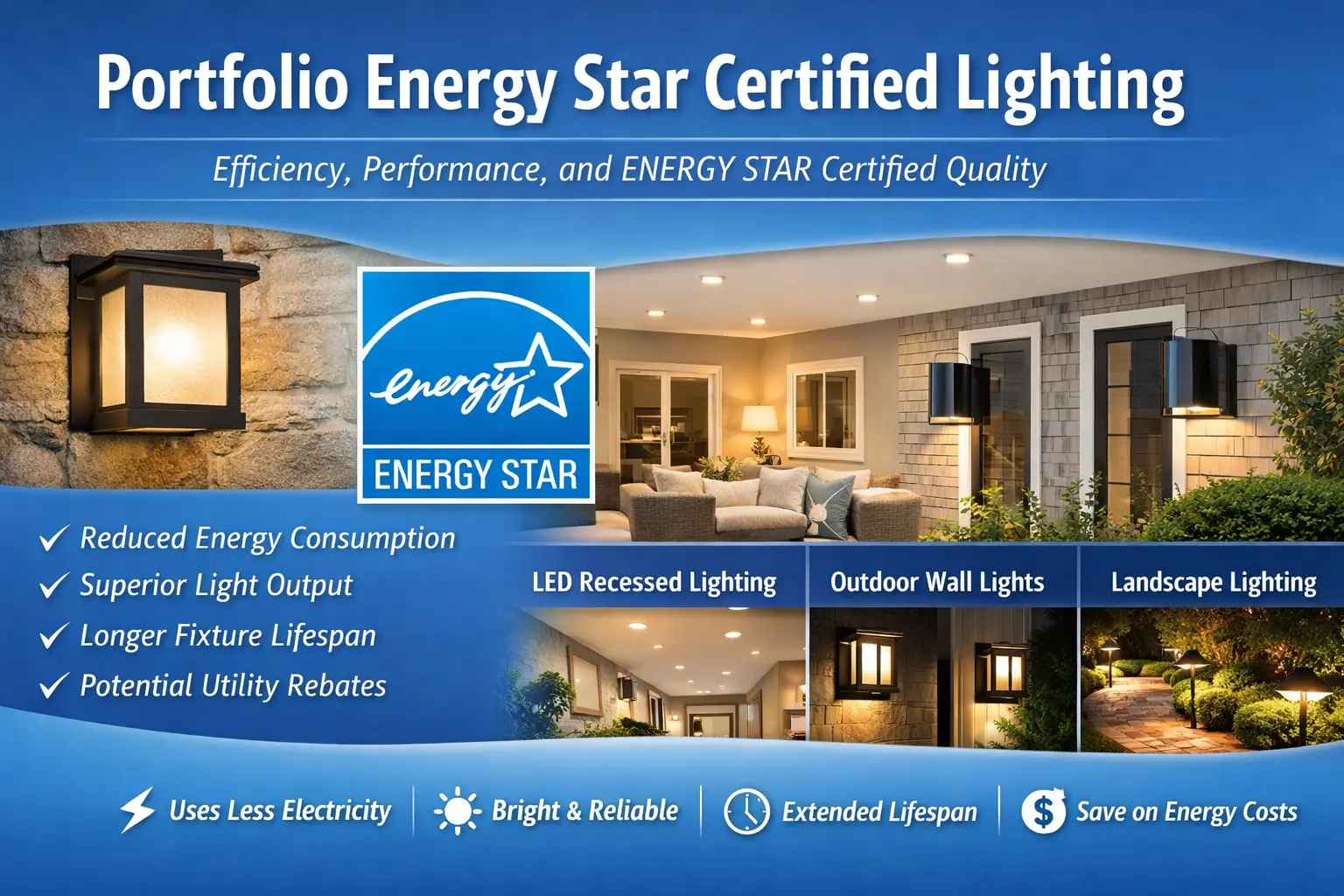
What Is Portfolio Energy Efficient Lighting? (Quick Answer)
Portfolio energy efficient lighting refers to fixtures and systems that use less electricity while still providing practical light output. In most homes, this means switching to LED fixtures, integrated LED designs, or low-voltage outdoor lighting systems.
- Most efficient: LED and integrated LED fixtures
- Best outdoor option: low-voltage lighting systems
- Energy Star role: helps identify efficient fixture categories
Energy Efficient Lighting Logic Summary
| If Your Goal Is... | Best Lighting Choice | Why It Usually Wins |
|---|---|---|
| Lower electric bills | LED fixtures | They use less power than older incandescent or fluorescent lights |
| Fewer bulb changes | Integrated LED lighting | They usually last longer and need less routine maintenance |
| More efficient outdoor lighting | Low-voltage systems | They provide better control for paths, landscape zones, and night use |
| Comparing efficient fixture categories | Energy Star certified fixtures | They help identify products built around efficiency standards |
| Replacing older fluorescent or incandescent fixtures | LED upgrade | That is usually where homeowners see the biggest efficiency improvement |
| Reducing power use without changing the whole system | Targeted fixture replacement | Replacing the most-used fixtures first gives the fastest practical savings |
The best energy efficient lighting choice usually depends less on labels alone and more on how long the light runs, where it is used, and how much maintenance the current fixture requires.
Energy-efficient fixtures can still lose visible brightness years before complete failure. The LED L70 performance database explains how lumen depreciation affects long-term fixture brightness even in Energy Star-rated systems.
Estimated 10-Year Operating Cost: One Fixture
Energy savings are easiest to understand when you compare the same fixture location over time. This estimate assumes one fixture runs 3 hours per day at $0.12 per kWh.
| Fixture Technology | Wattage | 10-Year Energy Cost* | Maintenance Factor |
|---|---|---|---|
| Legacy Incandescent | 60W | $262.80 | High — 10+ bulb changes |
| Legacy Fluorescent | 18W | $78.84 | Medium — ballast or tube failure |
| Portfolio LED Upgrade | 9W | $39.42 | Low — bulb change only |
| Portfolio Integrated LED | 8W | $35.04 | Zero bulb changes, but fixture may need replacement if the LED module fails |
*Estimate based on 3 hours per day at $0.12/kWh. Actual cost depends on your local electric rate and daily run time.
Start Here: What Are You Trying to Improve?
Most visitors looking at energy efficient lighting are trying to solve a specific problem. Use the paths below to find the right solution faster.
- High energy bills: replace older incandescent or fluorescent fixtures
- Too many bulb replacements: switch to integrated LED fixtures
- Outdoor lights run all night: use low-voltage systems or timers
- Planning a full upgrade: compare LED, low voltage, and Energy Star options
- Lights not performing well: check system setup before replacing everything
Choosing the right upgrade depends on where your lighting is used and how often it runs.
When homeowners search for Portfolio energy efficient lighting, they are usually trying to answer a practical question: how can I reduce power use, lower maintenance, and still keep good lighting in the spaces that matter most? Find your answers here.
This page serves as the broad energy-efficiency explainer within our energy efficient resources. In my experience, there can be confusion so it is not meant to replace a dedicated LED page, a low-voltage page, or a more general efficiency page. Instead, it helps visitors understand how Energy Star certified fixtures, LED technology, and lower-wattage lighting systems fit together so they can move to the right next step without confusion.
What Portfolio Energy Efficient Lighting Means
Portfolio energy efficient lighting generally refers to fixture choices that reduce electricity use while still delivering enough useful light for the space. In real homes, that usually means moving away from older high-consumption lighting setups and toward products that offer a better balance of brightness, lifespan, and operating cost.
For Portfolio lighting, the most common energy-efficient paths include Portfolio LED lighting, Portfolio integrated LED lighting, Portfolio low voltage lighting, and selected fixtures that are described or sold within an energy-conscious category such as Portfolio energy efficient lighting.
This page focuses on how those pieces fit together, with special attention to Energy Star certified lighting as a supporting concept. That matters because many visitors are not searching for certification alone. They are searching for the most practical way to lower power use in indoor fixtures, outdoor walls lights, pathway systems, or aging replacement situations.
Where Energy Star Certified Lighting Fits
Energy Star certified lighting fits best as a signal that a fixture belongs in a more energy-conscious part of the market. For homeowners, that can be useful because it adds confidence when comparing products that are supposed to reduce electricity use without sacrificing practical performance.
On PortfolioLighting.net, this topic works best when framed as part of a broader efficiency decision. A visitor may be comparing an older Portfolio incandescent lighting fixture against a newer LED replacement, or deciding whether an older Portfolio fluorescent lighting setup is still worth keeping. In both cases, Energy Star certified lighting is part of the efficiency conversation, but it is not the only factor that matters.
In practical terms, most homeowners care about four things more than the label alone: how much electricity the light uses, how often bulbs or components need replacement, how much heat the fixture creates, and whether the light still fits the room or outdoor application properly.
Most Energy-Efficient Portfolio Lighting Categories
The biggest efficiency gains usually come from choosing the right category, not just the right label. The table below shows where homeowners most often see meaningful energy-use improvements.
| Portfolio Category | Where It Helps Most | Why It Is More Efficient | Best Next Page |
|---|---|---|---|
| LED lighting | Indoor rooms, task areas, decorative fixtures | Lower power use, longer life, less routine bulb replacement | Portfolio LED lighting |
| Integrated LED lighting | Modern replacements for older indoor fixtures | Designed around efficient light output and simpler upkeep | Portfolio integrated LED lighting |
| Low-voltage lighting | Landscape paths, gardens, outdoor systems | Efficient outdoor operation with better system control | Portfolio low voltage lighting |
| Landscape LED systems | Outdoor paths, accents, focal lighting | Combines low-voltage design with lower-maintenance fixtures | Portfolio LED landscape lighting |
| Energy-conscious indoor upgrades | Replacing fluorescent or incandescent fixtures | Reduces power use and often modernizes the room at the same time | Portfolio energy efficient lighting |
Efficiency Decay: When an “Efficient” LED Fixture Is Actually Failing
Retail listings often make LED efficiency sound permanent, but LED fixtures do not stay at their original brightness forever. Most LEDs do not suddenly burn out like an old incandescent bulb. They slowly lose light output over time.
This is called lumen depreciation. The common rating you will see is L70, which means the fixture is expected to produce about 70% of its original brightness at the rated life point.
Heat is the factor that often shortens that lifespan. A fixture rated for long life on paper can age much faster inside a tight flush-mount housing, a poorly ventilated ceiling, a hot attic-adjacent space, or a windowless basement where lights stay on for long evening hours.
If you are comparing integrated LED replacements, also review the Portfolio replacement LED modules and drivers guide before assuming the whole fixture must be replaced.
Why Energy Efficient LEDs Glow at Night
One of the most confusing LED problems is a light that glows faintly even when the switch is off. This is often called ghosting, phantom glow, or leakage current.
Energy efficient LEDs use so little wattage that even a tiny amount of current from an illuminated wall switch, older dimmer, smart switch, occupancy sensor, or timer can be enough to make the LED driver wake up slightly.
The fix is usually not replacing every bulb. Common solutions include using an LED-compatible dimmer, removing an illuminated switch, adding the correct bypass or load resistor where allowed, or switching to a fixture/control combination designed for low-wattage LED loads.
If the light also flickers, blinks, or behaves unpredictably, use the Portfolio lighting troubleshooting guide to separate ghosting from wiring faults, loose neutral issues, incompatible dimmers, and failing LED drivers.
Color Rendering vs. Efficiency: Do Not Chase Lumens Per Watt Alone
The most efficient-looking bulb on a shelf is not always the best light for a home. Cooler 4000K to 5000K LEDs often produce more lumens per watt, but they can make kitchens, bathrooms, wood tones, skin tones, and living spaces feel harsh or commercial.
This is the trade-off between efficacy and aesthetics. Efficacy measures light output per watt. Aesthetics depends on color temperature, CRI, R9 red rendering, glare, and how the light feels in the actual room.
This matters even more for older adults. A high-output 5000K fixture may look efficient on paper, but it can create more glare for seniors with cataracts or light sensitivity. Efficiency should never override visual safety.
For a deeper look at CRI and color quality, see the CRI 95 vs CRI 80 lighting guide.
Which Energy Efficient Lighting Option Should You Choose?
| Your Situation | Best Option | Why |
|---|---|---|
| Replacing old bulbs | LED fixtures | Biggest drop in power use |
| Frequent maintenance issues | Integrated LED | Long lifespan, fewer replacements |
| Outdoor lighting system | Low-voltage lighting | Better control and lower energy use |
| Comparing fixture quality | Energy Star options | Helps identify efficient categories |
How Homeowners Usually Save the Most Energy With Portfolio Lighting
Most homeowners do not save the most energy by obsessing over one technical label. They save the most by replacing the least efficient fixtures in the spaces where lights run the longest. That may be a frequently used bathroom vanity, a kitchen task light, a hallway fixture that stays on for hours, or an outdoor lighting system that runs nightly.
If your current lighting is using more power than expected or not performing efficiently, it may not just be the fixture type. System issues like wiring, placement, or outdated components can also affect performance. Use our Portfolio lighting troubleshooting guide to identify problems before upgrading.
If this happens, compare your system with the Portfolio Lighting Transformer Master Guide before replacing every fixture. The transformer may need a different load strategy, a modern LED-compatible replacement, or a better zone layout.
1. Replace older incandescent fixtures or bulbs first
If you still rely on legacy bulb-based fixtures, that is often the easiest place to start. The difference between Portfolio incandescent lighting and newer LED-based options is usually where homeowners notice the clearest efficiency improvement.
2. Upgrade aging fluorescent fixtures when replacement parts get annoying
In garages, utility rooms, closets, and work zones, older Portfolio fluorescent lighting can still function, but once flickering, buzzing, or replacement-part hunting becomes common, many homeowners shift toward more efficient fixture types instead of continuing to repair the old setup.
3. Use low-voltage systems outdoors where appropriate
Outdoor lighting can become much more manageable when it uses the right system design. A properly planned Portfolio low voltage lighting setup or Portfolio landscape lighting system often gives better control over energy use than older higher-consumption outdoor lighting patterns.
4. Match the efficient fixture to the room type
Efficiency is not just about power use. It is also about choosing a fixture that fits the room well enough that you do not need multiple overlapping lights to compensate. That is why it helps to compare room-specific categories such as Portfolio bathroom lighting, Portfolio task lighting, Portfolio under cabinet lighting, and Portfolio flush mount lighting.
Repair Older Fixtures or Upgrade to a More Efficient Option?
This is usually the real decision behind an efficiency search. Some homeowners do not need a completely new lighting strategy. They simply want to know whether it is smarter to keep an existing fixture going or replace it with something that uses less electricity and needs less maintenance.
Repair may still make sense when
- the fixture fits the room well and only needs a minor part
- the housing, shade, or decorative style still matches surrounding lights
- the real issue is a simple bulb replacement or small repair
- you are not using the light enough for efficiency gains to matter much
Upgrading usually makes more sense when
- the fixture runs for long hours every day or every night
- replacement bulbs, ballasts, or parts are becoming a hassle
- you want lower maintenance and lower operating cost over time
- the room or outdoor space would benefit from a more modern lighting layout anyway
If your current fixture is already giving you trouble, it helps to compare the efficiency decision with your repair situation. The main Portfolio lighting troubleshooting page, Portfolio lighting parts and accessories, and Portfolio lighting model number lookup guide can help you decide whether the old light is worth one more repair cycle.
Indoor and Outdoor Energy-Efficiency Choices
Portfolio energy efficient lighting matters differently indoors and outdoors, so it helps to separate the decision by use case. Indoor efficiency is usually about reducing bulb changes, lowering everyday room energy use, and upgrading from older fixture technologies. Outdoor efficiency is more about system design, transformer choice, nightly run time, and using the right low-voltage or LED fixtures in the right places.
Indoor Efficiency Paths
Best for replacing older incandescent or fluorescent fixtures in common living areas, bathrooms, kitchens, and work zones.
View indoor LED optionsOutdoor Low-Voltage Systems
Helpful when your goal is to reduce power use in pathways, gardens, spotlights, and exterior accent lighting.
View low voltage lightingLandscape Efficiency Planning
Useful for homeowners comparing transformer-based outdoor layouts, spacing, and power consumption across a system.
View landscape lightingOutdoor Wall and Entry Lighting
A good next step if you are comparing outdoor wall fixtures and want a more efficient replacement path.
View outdoor lightingPortfolio Energy Efficient Lighting FAQ
What is Portfolio energy efficient lighting?
Portfolio energy efficient lighting generally refers to fixtures and systems designed to deliver practical light output while using less electricity than older incandescent or less efficient legacy lighting setups. That often includes LED fixtures, some Energy Star certified products, and low-voltage outdoor lighting systems.
Does Energy Star certified mean a Portfolio light uses less electricity?
In practical terms, Energy Star certification is associated with fixtures built to meet energy-efficiency standards, which can help homeowners identify lower-energy lighting choices within a broader lighting category.
Is this page the same as Portfolio LED lighting?
No. This page is a broader energy-efficiency guide that explains how Energy Star certified fixtures, LED lighting, low-voltage systems, and replacement decisions fit together. The dedicated LED page is more specific to Portfolio LED lighting itself.
What Portfolio lighting types are usually the most energy efficient?
In most homes, the most energy-efficient Portfolio lighting options are typically LED fixtures, integrated LED fixtures, and low-voltage outdoor lighting systems when they are matched properly to the space and installed correctly.
Why does my energy-efficient Portfolio light flicker or glow when turned off?
Energy-efficient LEDs can flicker or glow when turned off because their drivers are sensitive to tiny leakage current from smart switches, illuminated wall switches, old dimmers, timers, or sensors. The fix is usually an LED-compatible control, a proper bypass/load device where allowed, or troubleshooting the switch and wiring instead of replacing every fixture.
Final Thoughts on Portfolio Energy Efficient Lighting
Portfolio energy efficient lighting is a valuable topic because it helps homeowners make better decisions across the rest of the site. Instead of treating lighting efficiency as a vague buzzword, this page connects it to real fixture choices: replacing older incandescent or fluorescent lights, using LED where it makes the most impact, and planning outdoor systems that are more practical to operate night after night.
Energy Star certified lighting belongs in that conversation, but it works best as a supporting signal within a larger efficiency strategy. Use this page to understand the bigger picture, then move to the more specific Portfolio category page that matches your room, fixture type, or upgrade plan.
More Portfolio Efficiency and Technology Guides
Portfolio Energy Efficient Lighting
Use the broader efficiency page if you want a wider overview of lower-power fixture categories and upgrade paths.
Read the guidePortfolio LED Lighting
Best for homeowners comparing efficient indoor lighting replacements and modern bulb or fixture upgrades.
Read the guidePortfolio Low Voltage Lighting
Helpful when the efficiency question is really about outdoor systems, transformers, and lower-power landscape lighting.
Read the guidePortfolio Landscape Lighting
Useful if you are evaluating how outdoor layout, fixture choice, and run time affect real-world energy use.
Read the guidePortfolio Fluorescent Lighting
Compare older utility lighting against more efficient upgrade paths when fluorescent fixtures start becoming harder to maintain.
Read the guidePortfolio Incandescent Lighting
Review classic bulb-based fixtures if you are deciding whether the biggest savings will come from replacing legacy incandescent lighting first.
Read the guidePortfolio Energy Efficient Lighting, Energy Star Certified Fixtures, and Low-Power Lighting Decisions
This page is designed to support the energy-efficiency side of PortfolioLighting.net by helping our readers understand how Energy Star certified lighting fits within a broader Portfolio energy efficient lighting strategy. It works as a supporting cluster page that connects LED, low-voltage, indoor replacement, and outdoor efficiency topics.
If your main goal is simply reducing electricity use, start with the fixture categories that run the longest and cost the most to maintain. That usually points homeowners toward LED upgrades, integrated LED replacements, or low-voltage outdoor systems before anything else.